Modern optical systems demand extreme precision, frequency
stability, and minimal signal interference. From coherent communication to
high-resolution sensing, laser performance directly affects system accuracy. An
ultra
narrow linewidth fiber laser plays a critical role in meeting these
technical requirements by delivering consistent optical output with very low
phase noise.
This article explains how ultra-narrow linewidth fiber
lasers support advanced optical applications, why low noise performance
matters, and where these lasers are commonly used in high-end photonic systems.
Understanding Ultra-Narrow Linewidth Fiber Lasers
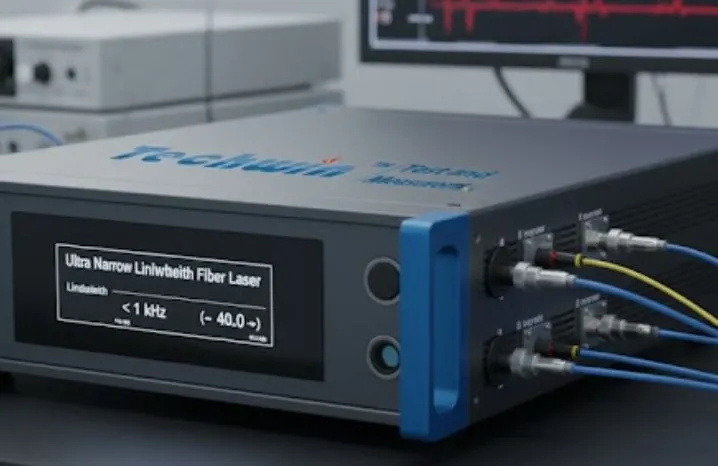
An ultra narrow linewidth fiber laser is designed to emit
light with extremely small spectral width. Linewidth is a measure of frequency
stability, and a narrower linewidth indicates less frequency fluctuation over
time.
In practical terms, this means:
- Improved
coherence length
- Higher
signal accuracy
- Reduced
phase noise
- Better
compatibility with interferometric systems
These lasers are engineered using single-frequency designs
and specialized fiber components to maintain spectral purity even under
environmental variations.
Why Linewidth and Noise Matter in Optical Systems
Optical systems rely on stable light sources to function
accurately. Even small fluctuations in frequency or phase can introduce errors
in measurement, data transmission, or sensing results.
A low noise fiber laser minimizes unwanted amplitude and
phase variations, which is essential for:
- High-resolution
interferometry
- Precision
spectroscopy
- Coherent
detection systems
- Optical
frequency references
Low noise output allows optical systems to maintain signal
integrity across long distances and extended operating periods.
Key Benefits of Ultra-Narrow Linewidth Fiber Lasers
1. High Frequency Stability
Ultra-narrow linewidth lasers maintain consistent emission
frequencies over time. This stability supports applications that depend on
precise phase alignment, such as coherent optical communication and metrology.
2. Long Coherence Length
Narrow spectral width directly increases coherence length.
This is essential in interferometric systems where accurate phase comparison
determines measurement quality.
3. Reduced Phase and Intensity Noise
By operating as a low noise fiber laser, these sources
reduce interference caused by signal fluctuations. This leads to clearer signal
processing and more reliable system output.
4. Compact and Fiber-Integrated Design
Fiber-based laser architecture allows easy integration into
optical systems without alignment complexity. The compact form also supports
long-term operation with minimal maintenance.
5. Environmental Robustness
Ultra-narrow linewidth fiber lasers are less sensitive to
temperature and vibration compared to free-space laser designs, making them
suitable for industrial and field applications.
Applications Across Modern Optical Systems
Ultra-narrow linewidth fiber lasers are widely used across
industries where optical accuracy is essential.
Optical Communication
Coherent communication systems depend on stable frequency
references. Narrow linewidth lasers support dense wavelength division
multiplexing and long-haul transmission with reduced signal distortion.
Fiber Optic Sensing
Distributed sensing technologies such as distributed
acoustic sensing (DAS) and distributed temperature sensing (DTS) rely on stable
laser sources to detect small environmental changes.
Precision Measurement and Metrology
In optical frequency combs, atomic clocks, and
interferometric measurements, ultra-stable lasers ensure repeatable and
accurate results.
Spectroscopy and Research
Scientific research applications require controlled spectral
output to analyze material properties, chemical composition, and physical
interactions at a micro level.
Design Factors That Influence Performance
When selecting an ultra-narrow linewidth fiber laser, system
designers typically evaluate:
- Linewidth
specification (Hz or kHz level)
- Relative
intensity noise (RIN)
- Output
power stability
- Polarization
maintaining options
- Long-term
frequency drift
A well-engineered low noise fiber laser balances all these
parameters to ensure consistent performance across demanding applications.
Manufacturing Precision and System Reliability
High-quality fiber lasers are manufactured under strict
optical and electronic control processes. Precision cavity design, stable pump
sources, and advanced feedback mechanisms help maintain narrow linewidth and
low noise output over long operating cycles.
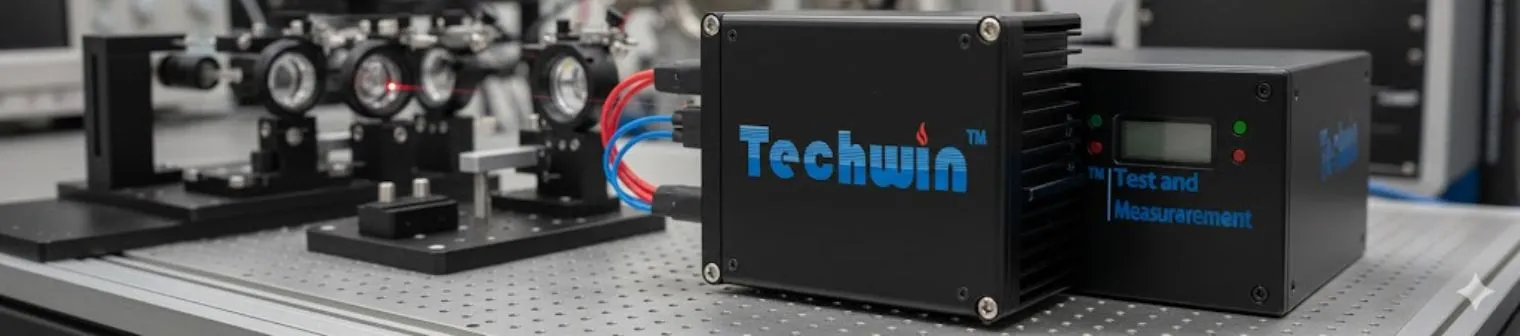
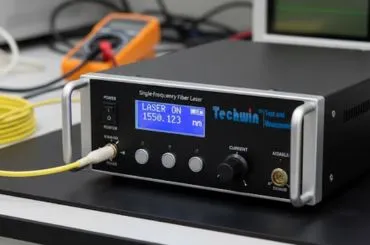
Single Frequency Fiber Laser- Techwin is based at Zhenhua
Road, Hangzhou City, where its laser systems are developed to meet industrial
and research-grade optical requirements.
Choosing the Right Solution for Your Optical System
Every optical system has unique requirements depending on
wavelength, output power, and environmental conditions. Selecting an
ultra-narrow linewidth fiber laser that aligns with your system architecture
ensures better accuracy, system stability, and operational efficiency.
Single
Frequency Fiber Laser- Techwin supplies precision laser solutions
engineered for modern optical platforms, supporting applications that demand
consistent frequency control and minimal noise.
An ultra
narrow linewidth fiber laser is a foundational component in
high-performance optical systems. Its ability to deliver stable frequency
output with minimal noise supports advanced communication, sensing, and
measurement technologies.
By combining narrow spectral width with fiber-based
reliability, these lasers continue to play a vital role in precision-driven
optical applications across industrial and scientific fields.
Latest from the blog
Explore our recent articles and insights.